Gold Mine Defender
- 4.1
- Rating
- 100.00K
- Installs
- Free
- Price

 Analysis by App-foxy
I approached Gold Mine Defender as a quick strategy game rather than a large, complicated campaign. Its central idea is easy to understand: protect a valuable gold mine from danger. That simple goal gives the game an inviting starting point, especially if you want something you can open, understand, and play without first studying a long set of rules.
My first impression was that the game is aimed at players who enjoy making decisions under pressure. The appeal is not just watching a mine survive; it is deciding what deserves attention first, when to spend effort on defense, and how much risk is acceptable before the next threat arrives. That makes it more interesting than a passive screen of progress, even though the premise is deliberately focused.
As a free strategy game from yuegame, it is easy to consider for a spare moment during a commute, a break, or a short evening session. It is rated for Everyone and runs on Android seven point zero or later, so the basic entry barrier is fairly low for compatible devices. The current version is 2.6, and the game has attracted over ten thousand installs, with a 4.1 average from around three hundred ratings. Those figures suggest a modest but real player base rather than a major mainstream release.
You May Also Like

 Blood Strike: 2.5 Anniversary
Blood Strike’s Loadouts Turn Every Drop Into a Tactical Gamble
A close look at Blood Strike’s custom loadouts: how fast access to signature weapons reshapes its battle royale rhythm, rewards preparation, and narrows the gap between fights.

 Pandora - Music & Podcasts
Pandora’s Music Is Easy to Start, but Harder to Recover
Pandora’s strength is its low-effort path from a seed to a station. Its weak spot is how much confidence it asks you to place in connection, setup, and quiet recovery.

 8 Ball Pool
 Is Built on Rivalries, Rematches, and Routine
A close look at the rivalries, rematches, shared routines, and unanswered safety questions that turn a quick pool match into a persistent mobile community.

 Samsung Music
’s Quiet Strength Is Playing What You Already Own
Its reach comes less from spectacle than from dependable access to a personal library. That simplicity is both the app’s strongest retention engine and its ceiling.

 AccuWeather: Weather Radar
AccuWeather Review: A Quick, Clear Forecast for Everyday Decisions
For everyday plans, the best forecast is the one you can understand quickly. AccuWeather makes rain timing, radar, and local conditions easy to act on, with a few trade-offs.

 Hill Climb Racing
Why Hill Climb Racing Still Turns Crashes Into One More Run
A tiny car, a bumpy hill and one more upgrade: Hill Climb Racing keeps resurfacing because its simple chaos makes every near-miss feel personal.
More From Our News Desk
View All News


Getting from the first launch to a useful defensive habit
I’d use the first few attempts to build a repeatable check: locate the mine, scan for the clearest danger, then decide whether to act now or preserve flexibility. That small pause can turn a frantic response into a deliberate one, and it gives each loss a useful lesson rather than making it feel random. Once that habit feels natural, the next question is how much risk to accept when the mine seems safe.
What the opening experience feels like
The best way to approach this game is to treat the first session as a lesson in priorities. The gold mine is the objective, but defending it successfully depends on noticing what is happening around that objective. I would not rush into trying to optimize everything at once. First, I would learn which parts of the screen show danger, which actions affect protection, and what the game considers a successful defense.
That mindset matters because strategy games often become confusing when a new player tries to react to every visual detail immediately. In this case, the mine gives you a clear anchor. Whenever I felt unsure about what to do next, I returned to the basic question: does this action make the mine safer now, or does it prepare me for the next problem? That question is more useful than clicking quickly without a plan.
The game’s strongest early quality is its focused objective. Many mobile strategy alternatives surround the player with several currencies, construction timers, research paths, characters, and menus. Gold Mine Defender feels more approachable when you want the defensive decision itself to be the main activity. The trade-off is that players who expect a broad empire-building system may find the scope narrower.
How I would handle the first setup
After installing, I would begin with the sound and visual information rather than trying to play at maximum speed. A first-time player should look for the mine, identify the direction or area from which danger appears, and notice whether the game highlights available actions. Even without memorizing every control, this creates a useful mental map before the pressure rises.
I also recommend using the first attempt as reconnaissance. Do not judge yourself harshly if the opening defense is messy. Watch what causes the mine to become vulnerable, how quickly a threat develops, and whether your first instinct wastes time. A failed opening can be more informative than a lucky win because it reveals which warning signs deserve attention.
One practical habit is to keep your attention divided between the immediate threat and the condition of the mine. Focusing only on enemies can make you react too late to the actual objective. Focusing only on the mine can leave you unprepared for the next attack. I found the most reliable rhythm was to check the mine, respond to the most urgent danger, then immediately look back at the overall situation instead of staying locked onto one target.
Because this is a free game, I would also recommend giving it a few sessions before deciding whether its pace suits you. The first launch tells you whether the premise is appealing, but the real test is whether you enjoy repeating the defensive decision: observe, choose a response, protect the mine, and adjust. If that loop feels satisfying, the focused design works in its favor.
The first meaningful success
A meaningful first success is not simply surviving by tapping randomly. It is completing a defense while understanding why your choices worked. I would define that moment as keeping the mine secure because you recognized the main threat early, used your available response deliberately, and avoided being distracted by less important activity.
To reach that point, I would use a conservative opening. Protect the most exposed part of the mine first, then wait briefly to see how the game responds. This is a better learning method than spending every option immediately. Saving a response for a second wave or a sudden change gives you information about timing and prevents the common beginner mistake of having nothing left when the situation becomes more serious.
Another useful technique is to identify your personal failure trigger. For some players, it will be reacting too late. For others, it will be overcommitting to one side or neglecting the mine while dealing with a distraction. Once you know the pattern, you can turn the next attempt into a specific experiment. For example, I would deliberately check the mine after every major action and see whether that alone improves the result.
This approach makes the game reassuring for a first-time user. You do not need to understand every possibility before playing well. You need one clear objective, one careful observation cycle, and the willingness to adjust after a mistake. That is a good fit for a compact strategy game, where learning through short attempts is more enjoyable than reading a manual.
Confusion points that can slow down new players
The biggest likely confusion is assuming that the most visible threat is always the most important one. In a mine-defense game, the danger closest to the action may not be the danger that creates the greatest risk. I learned to pause for a moment and consider whether dealing with one problem leaves another route open. That small delay can prevent a rushed decision from becoming a larger defensive failure.
New players may also confuse activity with progress. Tapping or acting constantly can feel productive, but strategy depends on choosing the right response rather than the fastest response. If the mine is safe for a moment, use that moment to observe. A quiet interval is not wasted time; it is an opportunity to prepare and avoid spending a useful option without a clear reason.
Another point of friction is learning the game’s visual language. If several objects, warnings, or targets appear on screen, it can take a few attempts to understand which ones matter immediately. I recommend watching before reacting during the earliest safe moment. Look for repeated patterns: what appears before pressure increases, what changes when the mine is threatened, and which visual cues remain irrelevant.
There is also a difference between a game that rewards planning and one that rewards memorizing a fixed sequence. I would not assume that repeating the exact same actions is always the best path. Instead, use each attempt to test one change. If you alter everything at once, you will not know what improved the result. Changing one priority, one timing choice, or one defensive position makes the learning process much clearer.
The focused premise can create another expectation problem. Gold Mine Defender is not the right choice if you are looking for a deep city builder, a long narrative adventure, or a strategy game built around diplomacy and a large map. Compared with those alternatives, its attraction is immediacy. You are protecting one valuable objective, not managing an entire civilization. That makes it easier to start but gives it less room for broad strategic variety.
A realistic everyday session
Imagine having a few minutes before an appointment. I would open the game with one modest goal: complete a defense while paying attention to the first warning that usually causes trouble. I would not try to chase a perfect result. During the attempt, I would keep the mine in view, respond to the clearest danger, and reserve at least one decision for an unexpected change.
If the attempt failed, I would immediately note the reason in simple terms: I reacted late, protected the wrong area, or spent too much too soon. Then I would try again with only that issue changed. This turns a short session into useful practice instead of a sequence of frustrating restarts. If the attempt succeeded, I would stop after identifying what worked, rather than continuing until the game became tiring.
That kind of session is where the game makes the most sense to me. It does not demand that I build a long routine around it. I can play briefly, learn one thing, and return later with a clearer plan. Players who prefer extended progression may want more variety than this format offers, but people who like compact defensive challenges may appreciate the directness.
How it compares with familiar strategy alternatives
Compared with tower-defense games that cover the screen with upgrade trees and multiple lanes, this game’s gold-mine focus is easier to grasp. The advantage is a cleaner first session: you can think about protecting one central objective instead of learning a complete economy. The disadvantage is that players who enjoy elaborate combinations may find fewer layers to explore.
Compared with idle mining games, the difference is involvement. An idle game usually emphasizes watching resources accumulate with limited intervention. Here, the mine is something you actively defend, so attention and timing matter more. If you want a relaxing background experience, an idle alternative may suit you better. If you want the feeling that your decisions determine whether the objective survives, this game is the more appropriate direction.
Compared with large real-time strategy games, Gold Mine Defender is less demanding in terms of scope. You are not expected to manage a broad territory or coordinate many separate systems at once. That makes it more suitable for a first-time strategy player, but less satisfying for someone who wants a long-term campaign with many strategic layers.
The key trade-off is concentration versus breadth. The game’s narrow premise helps it communicate its purpose quickly. Whether that becomes a strength or a weakness depends on what you want from mobile strategy. I would recommend it to someone who enjoys defending a clear target and improving through repeated decisions. I would skip it in favor of a larger alternative if I wanted extensive progression, storytelling, or a wide range of play styles.
Small habits that improve the learning curve
My first tip is to separate observation from action. At the beginning of a defense, take a moment to identify the mine’s vulnerable side and the most urgent warning. This reduces panic and gives your first move a purpose. It is especially helpful when the screen becomes busy and several possible responses compete for attention.
My second tip is to treat resources or defensive actions as insurance, not as something that must be spent immediately. The strongest early move may be the one that keeps a response available for a more dangerous moment. This is a common strategy trade-off, but it is particularly important in a focused mine-defense game because one careless commitment can leave the central objective exposed.
My third tip is to review the moment just before a failure. Do not only look at the final damage or defeat screen. Ask what decision created the problem several moments earlier. Often, the real mistake is not the last reaction but an earlier choice that removed flexibility. Finding that earlier point is how repeated attempts become genuine improvement.
My fourth tip is to set a session goal that is narrower than “win.” Try to recognize every warning, protect the mine while saving one option, or avoid responding to a distraction. These goals make progress visible even when the final outcome is not perfect. They also help you decide whether the game’s learning loop is enjoyable for you.
Who should install it, and who should pass
I think Gold Mine Defender is a sensible choice for someone new to mobile strategy who wants a clear defensive objective. It is also a good option for players who enjoy short challenges, learning from mistakes, and making decisions without managing a huge number of systems. The Everyone age rating makes it approachable for a broad audience, although the best fit still depends on whether the player enjoys pressure and repetition.
I would be more cautious about recommending it to someone who wants a story-driven experience or a deep construction game. The gold-mine premise gives the title its identity, but it also defines its limits. If your favorite strategy games let you negotiate, expand, customize a large base, or follow a lengthy campaign, this may feel too contained.
The developer, yuegame, has kept the concept straightforward enough for a first attempt to make sense quickly. That simplicity is valuable, but it means the game must hold your interest through the quality of its defensive decisions rather than through a wide collection of unrelated activities. In my view, that is a fair exchange when you want a focused game rather than a second job on your phone.
My final recommendation after learning the loop
Gold Mine Defender works best when I play it as a compact exercise in attention and prioritization. The path to enjoying it is simple: identify the mine, watch for the first meaningful threat, resist spending every response at once, and use each attempt to correct one specific mistake. That gives a first-time player a concrete route from installation to a satisfying success.
Its free price makes trying it straightforward, and the Android compatibility from version seven point zero onward covers many older devices. The 4.1 average from around three hundred ratings is consistent with a game that has found an audience without becoming a major hit, while over ten thousand installs indicate that it is not an entirely unknown experiment. I would treat those figures as context, not a substitute for deciding whether the gameplay loop matches your taste.
My honest view is that Gold Mine Defender is worth trying if you want a focused strategy game built around protecting one valuable objective. Its strongest feature is the clarity of that goal, and its main limitation is the same narrow scope. Start slowly, learn what the warnings mean, and judge it after several thoughtful attempts rather than one rushed loss. If defending the mine feels rewarding, the game can provide a pleasant short-session challenge; if you are searching for a sprawling strategy world, you will probably be happier with a broader alternative.
FAQs for Gold Mine Defender
01What is Gold Mine Defender and how is the gameplay structured?
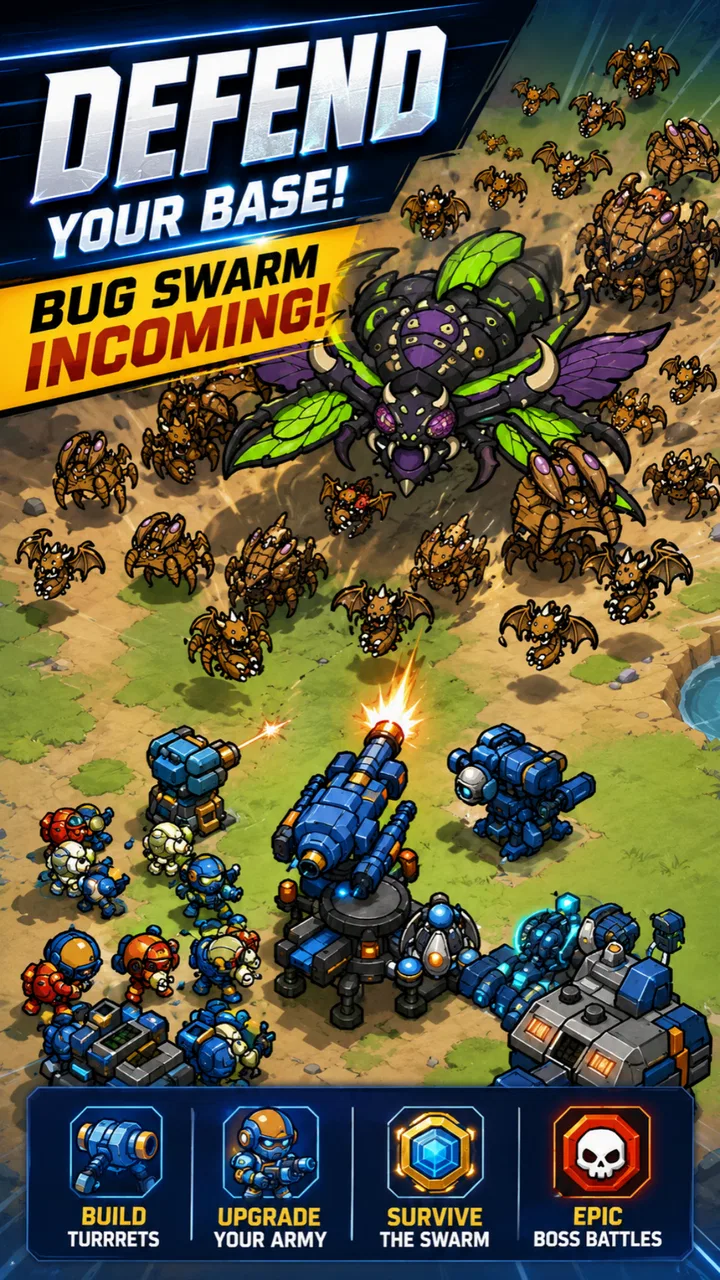
Gold Mine Defender is a defensive strategy game in which you protect a valuable mine from waves of enemies. After starting a level, you normally place or upgrade defensive units, manage available resources, and try to stop attackers before they reach the mine. The game combines tower-defense planning with quick decisions, so choosing the right position and timing is important for completing stages successfully.
02Can Gold Mine Defender be played offline?
Gold Mine Defender may be playable without a constant internet connection, especially for its main single-player levels, but this can depend on the version installed and the device platform. An internet connection may still be required for advertisements, updates, cloud features, analytics, or optional rewards. It is best to launch the game online at least once after installation and check its current requirements before relying on it during travel.
03Is Gold Mine Defender free to download, and does it include in-app purchases?
The game is generally offered as a free download, allowing players to try its core gameplay without paying upfront. However, free games commonly use advertising, optional purchases, or both to support development. These extras may provide currency, boosts, additional attempts, or faster progress. Review the store listing and purchase settings carefully, particularly if children will be using the device.
04What devices are compatible with Gold Mine Defender?
Compatibility depends on the operating system, store version, and minimum software requirements published by the developer. Before downloading, check whether your Android or iOS version is supported and make sure the device has enough free storage for the installation and future updates. Older phones and tablets may run the game, but performance can vary, particularly during busy enemy waves or when several visual effects appear at once.
05Is Gold Mine Defender suitable for children and casual players?
Gold Mine Defender is likely approachable for casual players because its basic objective is easy to understand: defend the mine and survive enemy attacks. Nevertheless, later stages can require planning, repeated attempts, and careful resource management. Parents should also check the official age rating, advertising policy, and any in-app purchase options. The game is generally more suitable for players who enjoy light strategy rather than completely passive gameplay.
Pros
- Simple controls make it easy to start playing immediately.
- Short levels are well suited to quick gaming sessions.
- Mining and tower defense create a distinctive gameplay mix.
- Progression gives you reasons to replay levels and improve.
- Colorful visuals keep the battlefield easy to follow.
Cons
- Difficulty can rise sharply in later stages.
- Some upgrades may require considerable grinding.
- The interface can feel crowded during intense attacks.
- Replay value may depend heavily on personal strategy interest.
- Performance may vary on older phones or tablets.

Gold Mine Defender
Gallery